Preventative Drain Maintenance Tips for Yorba Linda and Brea Residents
For Yorba Linda and Brea homeowners, preventative drain maintenance helps reduce clogs and plumbing backups. This article offers practical tips on keeping drains clear and explains common blockage causes. Readers will learn simple kitchen and bathroom maintenance routines, safe cleaning methods, and when professional services like Drain Cleaning in Brea, CA, may be needed.
Common Causes of Residential Drain Clogs
Common residential drain clogs typically result from grease, hair, and other solids building up in pipes. Key causes include:
- Grease and food waste: Kitchen oils, fats, and food scraps solidify and stick inside pipes, leading to blockages. Over time, these deposits form thick plugs.
- Hair and soap scum: Hair shed in showers or sinks binds with soap residue to form gunky clogs in bathroom drains. Regular buildup of these materials slows flow.
- Non-flushable items: Flushable wipes, paper towels, hygiene products, and other debris should never be flushed, as they accumulate in toilets and sewer lines. Clogging is common when these materials catch on pipe edges.
- Roots and ground movement: Tree and shrub roots can invade older sewer lines, causing blockages and pipe damage. Even soil shifts can stress pipes. Slow draining or gurgling sounds may signal root intrusion.
- Real-world consequence: Small clogs may seem minor, but neglecting them often leads to complete backups, flooding, and costly repairs.
Identifying typical clogging materials focuses maintenance on prevention. For example, using strainers and avoiding grease keeps the most damaging substances out of the plumbing. Over time, routine prevention prevents minor obstructions from escalating into emergency blockages.
Kitchen Drain Maintenance Practices
Routine kitchen maintenance prevents grease and debris from clogging sink drains. Key practices include:
- Use sink strainers: Install fine-mesh strainers in kitchen drains to catch food particles, coffee grounds, and other scraps. Empty and rinse strainers daily. This simple device stops solids before they enter pipes.
- Hot water flush: Once a week, pour boiling or very hot water down the sink to melt and push any grease or soap buildup through the pipes. The heat helps dissolve fats before they harden.
- Dispose of grease and oil properly: Never pour cooking fats or oil down the drain. Let them cool and solidify, then scrape them into the trash. Catching liquid grease in a jar and trashing it prevents congealed clogs.
- Smart garbage disposal use: Run the disposal only with cold water and small food scraps. Avoid grinding fibrous or starchy items, which can jam machine blades. Running cold water while grinding helps flush particles out.
- DIY cleaning: Monthly, pour ½ cup of baking soda followed by ½ cup of vinegar down the drain. Wait 15–30 minutes, then flush with hot water. This fizzing mixture breaks down organic residue.
- Limitations of chemicals: Avoid relying on harsh chemical drain cleaners for routine maintenance. They may not dissolve heavy grease fully, and can corrode older pipes. Chemical cleaners are best reserved for true emergencies when other methods fail.
These measures dramatically reduce kitchen clogs. For instance, a strainer catches scraps that would otherwise build up. With regular hot-water flushes and grease disposal, homeowners usually avoid slow drains and bad odors. In practice, following these habits means fewer kitchen backups and less need for professional cleaning.
Bathroom Drain Maintenance Practices
Bathroom drains often clog from hair, soap scum, and residue, so targeted care is needed. Important steps include:
- Hair catchers: Use a shower or tub strainer to trap loose hair. Remove and clean it after each shower. Also, brush or comb long hair before bathing to reduce shedding. This prevents mats of hair from entering the drain.
- Flush with hot water or natural cleaners: Periodically pour hot water or a vinegar solution down bathroom drains. This helps dissolve minor soap scum and mineral buildup. A simple flush after a shampoo or shaving session can keep lines clear.
- Limit bar soap residue: Bar soaps contain fats that contribute to scum. Switch to liquid soaps or use less soap to reduce residue, or rinse the drain area after washing. This reduces the film that binds with hair to form clogs.
- Toilet use: Flush only human waste and toilet paper. Never flush wipes, cotton balls, sanitary products, or similar items. Keep a small trash bin in the bathroom to discourage flushing non-dissolvable items.
- Trap and vent care: Ensure sink and floor drain traps always have water in them. This prevents sewer gases from entering the home. Also, make sure all drain covers and caps are secure. Occasionally, pouring a little bleach down the trap can reduce odors.
- Toilet maintenance: If the toilet is clogged, do not use strong chemical cleaners. Instead, try using a plunger or snake, or have the shower drain snaked first, as toilets share a waste line. Regularly check that the toilet’s flush valve works properly.
In practice, these bathroom tips keep drains flowing. For example, hair catchers dramatically reduce shower clogs. Keeping only safe items in the toilet and flushing hot water through floor drains prevents most blockages. Without these precautions, homeowners often face slow showers, smelly drains, or backups requiring a plumber’s intervention.
Safe Drain Cleaning Methods and Tools
Gentle cleaning methods and simple tools allow homeowners to clear minor clogs without harming plumbing. Recommended methods include:
- Boiling water: Pour boiling water down sinks or tubs once a week (carefully) to break down grease and soap buildup. This is the simplest preventive flush.
- Baking soda and vinegar: For minor clogs, use a natural mixture. Pour ½ cup of baking soda, then ½ cup of white vinegar down the drain. Let it fizz for 15–30 minutes, then flush with hot water. This clears organic residue without chemicals.
- Plunger: A sink or cup plunger is effective for bathroom or kitchen clogs. To use, form a tight seal around the drain opening and pump several times. Plunging can dislodge blockages near the drain. Always have separate plungers for sinks/tubs and toilets.
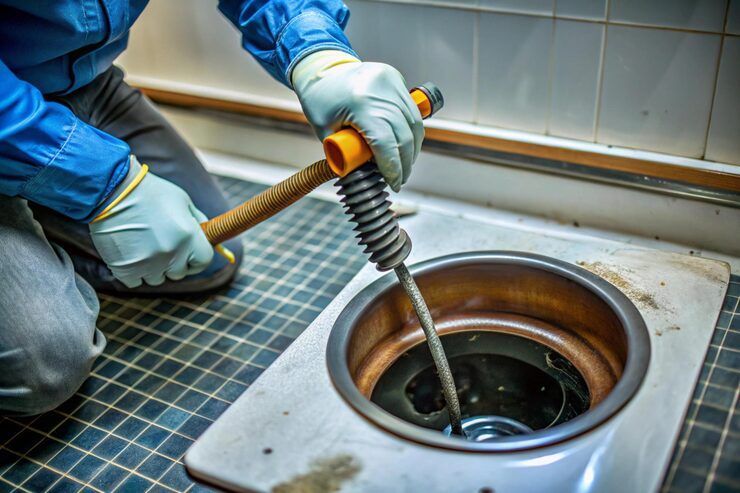
- Drain snake (auger): For deeper clogs, a hand-crank drain snake can reach into pipes. Insert it until you feel resistance, then twist to hook debris (like hair or grease) and pull it out. A snake can clear a clog beyond what a plunger can reach.
- Wire hanger: As a last resort, a straightened wire coat hanger (with a hooked end) can fish out hair near the drain opening. Use it gently to avoid scratching pipes.
- Avoid harsh chemicals: Chemical drain cleaners may dissolve soft clogs but are less effective on solid blockages, and they can corrode older pipes. They are not needed if routine maintenance is followed.
- Tool costs vs. benefits: A good plunger costs under $20 and can clear many common clogs instantly. A consumer drain snake is also inexpensive. By contrast, professional tools like a motorized sewer snake or hydro-jet are expensive and usually unnecessary if home maintenance is kept up.
Using safe methods yields reliable results. For example, a monthly baking soda flush can prevent buildup before it forms a clog. If a clog does occur, a quick plunge often suffices. By avoiding harsh chemicals (which can eat away at pipes), homeowners maintain plumbing integrity. In short, simple do-it-yourself cleaning keeps drains clear and avoids damage.
Common Mistakes to Avoid in Drain Maintenance
Homeowners should avoid certain actions that inadvertently cause clogs or damage. Common mistakes include:
- Pouring grease or oil: Never dump fats, oils, or grease down any drain or toilet. Even hot water won’t prevent grease from congealing as it cools. Instead, wipe grease off pans into the trash or store it for proper disposal.
- Flushing non-dissolvable items: Items like wipes, cotton balls, tissues, floss, or feminine products should always go into the trash, not the toilet. These products do not break down and quickly create major blockages in sewer lines.
- Overusing chemical cleaners: Relying on liquid drain cleaners regularly can harm pipe joints and septic systems. Chemicals often only clear soft clogs and may seal over leaks temporarily, leading to bigger failures later.
- Neglecting slow drains: Ignoring a slowly draining sink or shower allows minor clogs to worsen. A slow drain is a warning sign – address it promptly with plunging or flushing before it becomes a full blockage.
- Letting traps dry out: Ignoring trap maintenance (e.g., in floor drains) lets the water trap evaporate, allowing sewer gas odor. Always pour water in drains that aren’t used often to maintain the barrier.
- Improper tool use: For example, using a metal scrubber or overly stiff object can scratch PVC or metal pipes. Use tools as intended and stop if you feel resistance to prevent pipe damage.
Small mistakes often have big consequences. For example, one tablespoon of baking grease can eventually block an entire line if left unattended. Being mindful of what goes down the drain saves repeated headaches. Overall, avoiding these pitfalls means longer-lasting, trouble-free drains.
Professional Drain Inspection and Maintenance
Even with good home care, some situations call for professional help. Regular inspections and cleanings can address issues beyond DIY limits. Key points:
- Annual inspections: Schedule a yearly drain check. A plumber can use video inspection to spot hidden clogs or cracks before they cause trouble. In fact, many local plumbers recommend a professional drain cleaning in Yorba Linda, CA, once a year to clear buildup and roots.
- Hydro-jetting and camera: Professionals have tools like hydro-jetters (high-pressure water jets) and cameras that homeowners don’t. These remove hardened grease or root intrusion in main sewer lines that household methods can’t reach. This thorough cleaning restores pipe integrity.
- When to call: Consult a plumber if multiple fixtures clog at once, if you have foul odors from drains, or if toilet water backs up into other drains. Recurring clogs or “gurgling” sounds are also red flags that suggest issues beyond simple buildup.
- Costs and trade-offs: Professional drain cleaning has a cost, but it prevents the much higher expense of emergency repairs or pipe replacements. Often, a single thorough cleaning (every 1–2 years) is all that is needed for smooth operation.
- Local services: In Yorba Linda and Brea, plumbing services advertise “drain cleaning” for tough clogs and annual maintenance. While homeowners should prevent clogs first, having a reliable service on call ensures major blockages are handled promptly.
Overall, combining home upkeep with occasional expert maintenance offers the most reliable protection. Local plumbing professionals note that simple preventive actions greatly reduce emergencies. For example, removing a small grease deposit monthly is far easier and cheaper than unclogging a fully blocked sewer line.
Conclusion
Preventative home drain maintenance – catching debris in strainers, flushing drains regularly, and avoiding flushables – keeps pipes flowing and avoids backups. Simple habits coupled with occasional professional checks help Yorba Linda and Brea homeowners manage plumbing risk. Local pros like MHT Plumbing emphasize that routine care and timely inspections are the surest way to prevent costly clogs and repairs.
Frequently Asked Questions
How often should I clean or flush my drains?
Performing basic maintenance monthly is usually enough. For example, running hot water down kitchen drains weekly and doing a baking soda/vinegar flush once a month can keep drains clear. Heavy-use drains (like kitchen sinks) may need a strainer check weekly.
Can I use baking soda and vinegar to clear clogs?
Yes. Baking soda followed by vinegar is a safe, chemical-free method for minor buildups. Let the mixture sit 15–30 minutes, then rinse with hot water. It breaks down organic debris. For stubborn clogs, combine this with plunging or a drain snake.
What’s the best way to prevent grease from clogging pipes?
Never pour liquid grease down drains. Instead, let the grease cool and solidify (even pour boiling water to start, but only after it’s off the heat), then scrape it into the trash. Grease collection jars or absorbent paper towels help. This keeps oils out of the plumbing.
Is it safe to flush “flushable” wipes or paper products?
No. Even products labeled “flushable” often don’t break down fast enough and can clog pipes. Always throw wipes, tissues, cotton balls, and feminine products into the trash. Only flush human waste and toilet paper.
How can I prevent hair clogs in showers and tubs?
Install a hair catcher or screen over the drain to trap loose hair. Clean it after each shower. Brushing hair before showering also reduces shedding. These steps block most hair from ever entering the drain.
You might also like
Blog